Understanding Gut-Brain Nutrition for Kids
When we think about supporting a child's brain, we often think about sleep, learning, movement, emotional regulation, and cognitive development. But there's another important piece of the picture that starts somewhere a little unexpected: the gut.
The gut and brain are in constant communication through what researchers call the gut-brain axis. This two-way communication involves the nervous system, immune system, hormones, metabolism, and the trillions of microorganisms that make up the gut microbiome. Researchers are continuing to explore how these interactions may influence brain development and overall health (1).
For children and teens, nutrition and gut health can be one part of a holistic approach to supporting the developing brain and body. This can be particularly worth considering for neurodivergent children, including those with autism or ADHD, who may experience food selectivity or gastrointestinal concerns at higher rates (2).
Why Nutrition Matters for a Developing Brain
Childhood and adolescence are periods of significant growth and brain development. A balanced diet provides the nutrients the body needs to support this process, including:
- Protein, which provides amino acids needed for growth and many bodily processes
- Healthy fats, including omega-3 fatty acids, which are important components of brain cell membranes
- Fiber, which supports healthy digestion and helps nourish beneficial gut bacteria
- Vitamins and minerals, which support energy production and nervous system function
- Water, which supports digestion, energy, and overall health
For children with autism, research has documented higher rates of food selectivity and picky eating, which can sometimes make obtaining a broad range of nutrients more challenging. Researchers have also found associations between autism, gastrointestinal concerns, and differences in the gut microbiome, although the science is still evolving (2).
Research involving ADHD and the gut microbiome is also emerging, but findings remain mixed. There is currently not enough evidence to definitively say that gut health causes autism or ADHD, or that changing the gut microbiome can cure either condition (3). Instead, nutrition can be viewed as one piece of a larger picture of whole-child wellness.
Supporting Gut Health When Eating Is Challenging
For some neurodivergent children, eating a variety of foods isn't as simple as "just try something new." Sensory sensitivities can make certain textures, smells, colors, or flavors difficult to tolerate.
Families can support healthy eating without turning mealtimes into a battle. Small steps might include:
Build on familiar foods. Introduce new foods that have similarities in texture, flavor, or appearance to foods your child already enjoys.
Add rather than restrict. Look for opportunities to incorporate fruits, vegetables, whole grains, healthy fats, or other nutrient-dense foods your child will tolerate.
Create predictable routines. Consistent meal and snack times can help make eating feel more familiar and manageable.
Keep food exploration low-pressure. Trying new foods can take time, especially when sensory differences are involved.
And if your child has significant food selectivity, digestive concerns, or difficulty getting adequate nutrition, their pediatrician or a registered dietitian can help determine what individualized support may be appropriate.
It's About the Whole Child
There isn't one food, diet, or supplement that works for every neurodivergent child. Autism and ADHD are complex neurodevelopmental conditions, and nutrition should complement—not replace—appropriate medical, therapeutic, educational, and behavioral supports.
At Brain Balance, we believe in a holistic approach, with nutrition being one of the many factors families can consider when supporting their child's brain and body.
Learn More at Our Free Gut Health Workshop!
Curious about the gut-brain connection and what gut health can look like for your family?
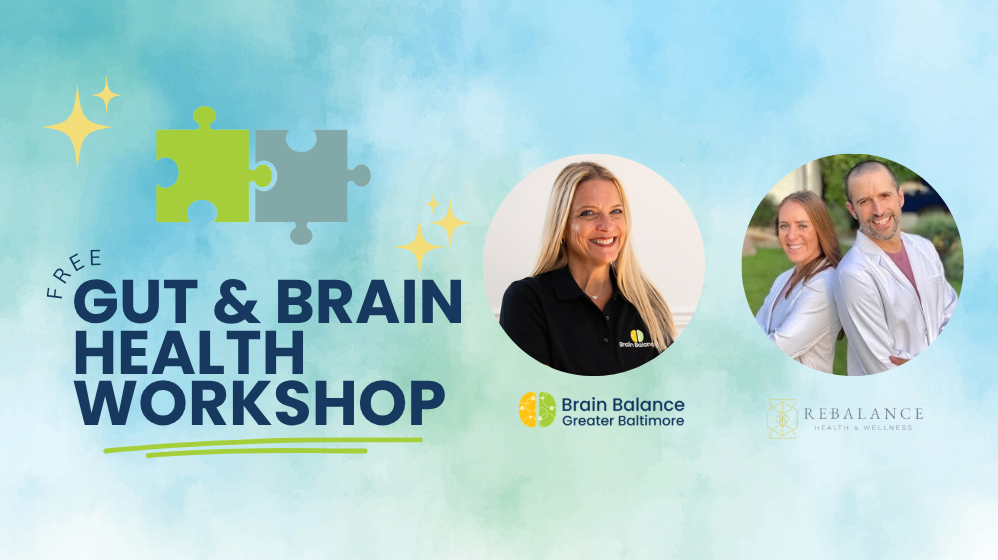
Brain Balance Baltimore is partnering with Rebalance Health and Wellness for an upcoming FREE Gut Health Workshop on October 27th from 6 pm to 8 pm!
Parents and caregivers will have the opportunity to learn more about gut health, nutrition, and the connection between the gut and brain, while connecting with wellness professionals and asking questions about supporting the whole child. We hope to see you there!
Sources & Further Reading
- Warner, B. B. (2019). The contribution of the gut microbiome to neurodevelopment and neuropsychiatric disorders. Pediatric Research. https://www.nature.com/articles/s41390-018-0191-9
- Almohmadi, N. H. (2024). Brain-gut-brain axis, nutrition, and autism spectrum disorders: a review. Translational Pediatrics. https://pubmed.ncbi.nlm.nih.gov/39399706/
- Carta et al. (2026). The microbiota–gut–brain axis as a modulator of symptom expression in autism spectrum disorder, with exploratory insights into ADHD. https://pubmed.ncbi.nlm.nih.gov/42294021/