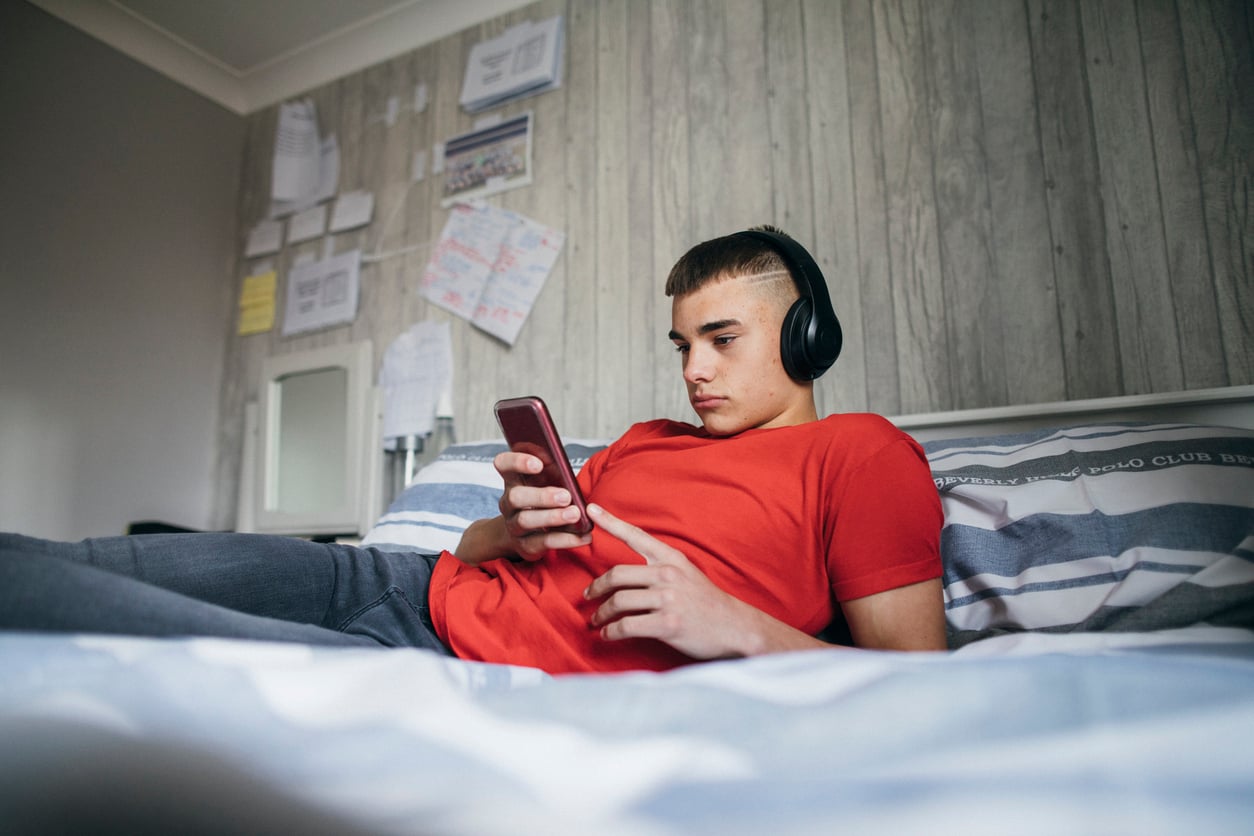
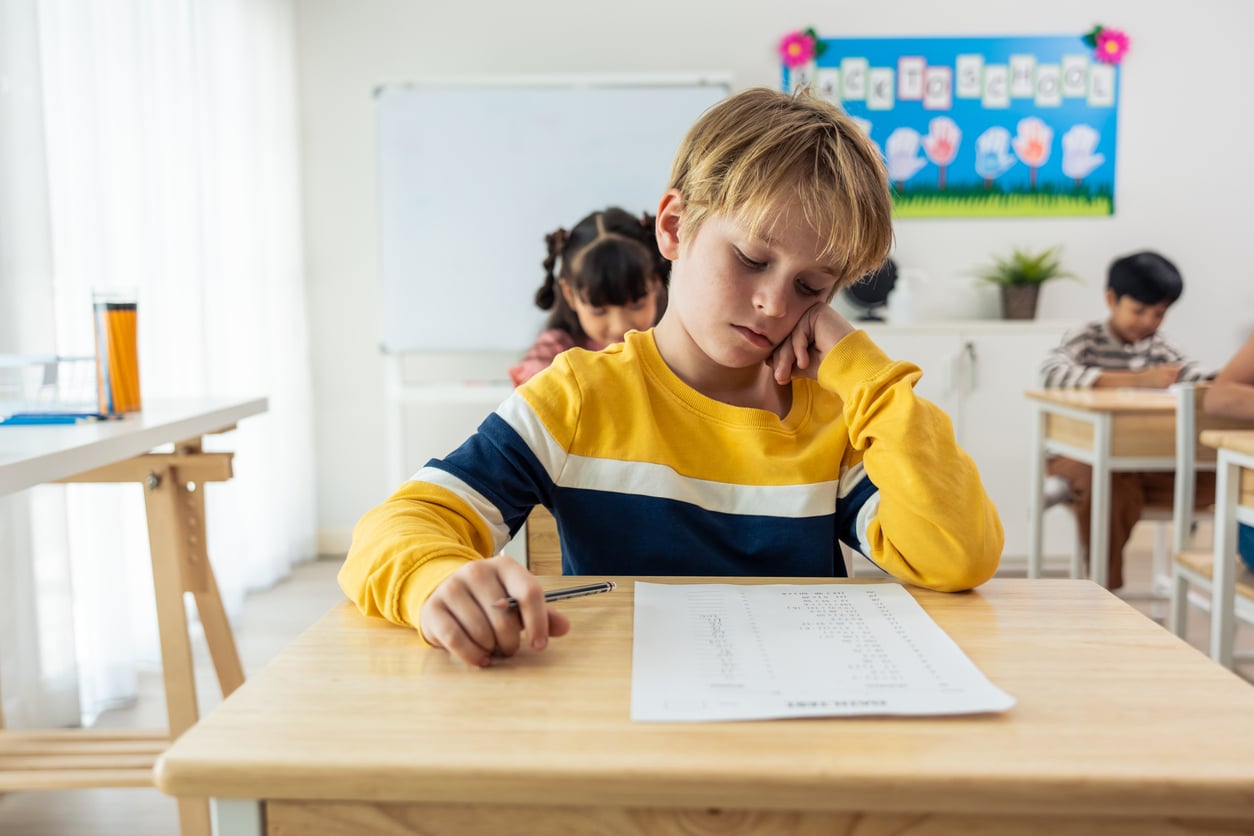
When a child struggles to wake up, stay focused, manage frustration, or complete homework, sleep may not be the first thing parents consider. The problem can look like a lack of motivation, poor behavior, or an attention challenge.
But the morning struggle may have started the night before.
A 2026 study followed 2,607 children from fourth through eighth grade and examined how their sleep changed over five years. Researchers found that sleep duration declined across all three groups they identified. Children who reported greater smartphone use were more likely to belong to the groups with shorter sleep patterns.
Smartphones were not the only factor. Private tutoring and academic demands were also associated with shorter sleep, reinforcing something many families already experience: children’s sleep can become squeezed between homework, activities, social connection, and devices.
The study does not prove that smartphones caused children to sleep less. It does, however, suggest that phones deserve special attention when families are trying to protect sleep. Unlike a television or shared computer, a smartphone can follow a child into the bedroom, remain within reach all night, and provide an endless stream of messages, videos, games, and notifications.
What Did the Study Find About Smartphones and Children’s Sleep?
Researchers used data from the Korea Children and Youth Panel Survey, a nationally representative study in South Korea. The children were approximately 10 years old when the study began in 2018 and 14 years old when the final data were collected in 2022.
The researchers identified three sleep patterns:
- A high-decreasing group, representing 16.7% of the children
- A mid-decreasing group, representing 78.2% of the children
- A low-decreasing group, representing 5.1% of the children
Every group showed a decline in sleep duration as the children grew older. The difference was where they started, how quickly their sleep declined, and how much sleep they were getting by eighth grade.
Smartphone use showed the strongest relationship with the sleep patterns. Children reporting more smartphone use were more likely to belong to groups with shorter sleep duration. Television and computer use showed weaker relationships.
The study also found that children spending more time in private tutoring were more likely to belong to the shortest-sleep group. This suggests that digital habits were only one part of the picture. Academic demands and the way children’s days were structured mattered, too.
Why Smartphones May Affect Bedtime Differently
A smartphone is not simply a smaller television. Several features make it uniquely capable of competing with sleep.
Smartphones are portable
A television usually stays in one room. A smartphone can move from the couch to the kitchen, into the bathroom, and under the covers.
Even when a child is expected to stop using the phone at bedtime, having it within reach can make the boundary difficult to maintain.
The content does not have a natural ending
A television show ends. A movie reaches its credits. Many smartphone platforms are intentionally designed to keep providing new content.
Short videos, social feeds, games, and recommendations can create a “just one more” cycle that delays the bedtime routine without the child fully noticing how much time has passed.
Smartphones create social pressure
For older children and teens, putting down the phone may feel like disconnecting from their friends. Group messages, social media interactions, gaming communities, and streaks can make children feel that they need to remain available.
A child may understand that sleep is important and still worry about missing a conversation, joke, update, or invitation.
For families deciding when to introduce these platforms, emotional readiness and the ability to follow healthy boundaries may be more useful considerations than age alone. Explore the questions parents can ask when deciding whether a child is ready for social media.
Notifications can continue after bedtime
Even when a child is not actively using a phone, sounds, vibrations, and illuminated screens can interrupt the process of settling down. A notification can quickly turn into checking one message, opening another app, and delaying sleep further.
Phones can become a primary calming strategy
Some children use videos, games, or scrolling to quiet their thoughts or avoid uncomfortable feelings at bedtime. Removing the phone without understanding that need can increase anxiety and conflict.
The goal is not only to take away the device. It is to help the child develop other ways to transition from an active day into sleep.
Smartphones are also part of a larger conversation about how digital habits may relate to sleep, emotional health, and the developing brain. Learn more about what current research says about screen time and brain connectivity
How Much Sleep Do School-Age Children and Teens Need?
According to consensus recommendations from the American Academy of Sleep Medicine:
- Children ages 6–12 should regularly get 9–12 hours of sleep per 24 hours.
- Teens ages 13–18 should regularly get 8–10 hours of sleep per 24 hours.
Regularly getting adequate sleep is associated with better attention, behavior, learning, memory, emotional regulation, and physical and mental health.
Individual sleep needs vary, and the number of hours is not the only consideration. Sleep timing, consistency, quality, and how rested a child feels during the day also matter.
Parents may notice possible signs of inadequate or disrupted sleep, including:
- Difficulty waking in the morning
- Irritability or emotional reactions
- Falling asleep in the car or after school
- Trouble focusing or remembering directions
- Increased impulsivity
- Low motivation
- Frequent requests to sleep later on weekends
- Difficulty beginning homework
- Reliance on caffeine
- Falling grades or reduced school engagement
These signs can have many possible causes. Persistent sleep concerns should be discussed with the child’s pediatrician or another qualified healthcare professional.
The Problem May Be Bigger Than the Phone
It is easy to place all the blame on a device, particularly when parents can see how much their child wants to use it.
But the study offers a more complicated picture. Children’s sleep may be caught between several competing demands:
- Homework that takes longer than expected
- Tutoring or academic support
- Sports and extracurricular activities
- Family responsibilities
- Early school start times
- Social pressure to remain connected
- Difficulty calming the body and mind
- Unstructured smartphone use
- A bedtime that keeps shifting later
A child who finishes an activity at 8:30, begins homework at 9:00, and then reaches for a phone to decompress may not have enough time left for the recommended amount of sleep.
In that situation, a phone boundary may help, but it will not solve the entire schedule problem. Families may need to look at what is making the evening feel rushed, overloaded, or difficult to complete.
How to Create a Realistic Phone-Free Bedtime Routine
A phone-free bedtime does not need to begin with an abrupt ban. Families are more likely to maintain a routine when it is clear, predictable, and designed around the child’s actual needs.
1. Start with the time your child needs to wake up
Work backward from the morning alarm using the recommended sleep range for your child’s age.
Then account for how long your child typically needs to fall asleep. If a child must wake at 6:30 a.m., getting into bed at 10:00 p.m. may not provide adequate sleep, especially if it takes 30 minutes or longer to settle.
2. Create a family charging station
Choose a consistent location outside the bedrooms where phones and tablets charge overnight.
Whenever possible, make this a family routine rather than a rule that applies only to the child. Seeing adults put their devices away makes the expectation feel more credible and less punitive.
3. Set a clear stopping point
“Get off your phone soon” can lead to repeated reminders and negotiations. A specific time is easier to understand and enforce.
Give warnings before the stopping point so the transition is not sudden. For example:
- Ten-minute warning
- Five-minute warning
- Device placed at the charging station
- Next step in the bedtime routine begins
4. Turn off nonessential notifications
If the phone must remain available for safety or family communication, use nighttime settings to silence apps, social messages, and other nonessential notifications.
Parents can also help children adjust settings that reduce constant prompts, autoplay, and app notifications throughout the day.
5. Replace the function the phone was serving
If a child uses a phone to relax, connect, or avoid racing thoughts, taking it away may leave that need unmet.
Possible replacements include:
- Listening to music or an audiobook on a device without social apps
- Reading
- Drawing
- Stretching
- Taking a warm shower
- Writing down tomorrow’s tasks
- Talking with a parent
- Using a brief breathing exercise
- Preparing clothes and school materials for the morning
The replacement should be simple enough to repeat consistently.
6. Look honestly at homework and activities
If homework, tutoring, practices, or other responsibilities regularly push bedtime later, the schedule itself may need attention.
Parents can ask:
- Is homework taking significantly longer than teachers expect?
- Is my child having trouble starting or organizing assignments?
- Are activities ending too close to bedtime?
- Does my child have any unstructured time to decompress?
- Are we trying to fit too much into school nights?
A child who struggles with attention, working memory, planning, or task initiation may spend far longer on evening responsibilities than parents realize. Addressing those challenges can be an important part of protecting sleep.
7. Expect adjustment, not instant perfection
Children and teens may push back against a new phone routine, especially if their friends remain online later.
Explain the reason for the change and invite the child to help solve practical problems. The core sleep boundary can remain firm while the details are collaborative.
Consistency matters more than creating a flawless routine on the first night.
When Bedtime Screen Conflict May Signal Another Challenge
Difficulty putting down a phone is common, but intense or persistent conflict may deserve a closer look.
Some children may rely on screens because they are struggling with:
- Anxiety
- Loneliness
- Social difficulties
- ADHD symptoms
- Academic frustration
- Sensory overload
- Emotional regulation
- Difficulty tolerating boredom
- Trouble shifting between activities
- Racing thoughts at bedtime
In these cases, the phone may be both a source of difficulty and a coping tool. Addressing only the device may miss the underlying reason the child is using it so heavily.
A pediatrician or qualified mental health professional can help evaluate significant sleep, mood, anxiety, or behavioral concerns. If focus, behavior, learning, or emotional regulation challenges continue during the day, families may also benefit from exploring the broader skills affecting the child’s daily functioning.
Focus on Protecting Sleep, Not Blaming Technology
The new study does not prove that smartphones are the sole reason children sleep less as they grow older. Screen use was self-reported, and the research was conducted within a South Korean educational environment that may differ from the experiences of families elsewhere.
Still, the findings give parents a useful place to start.
A smartphone is portable, engaging, socially connected, and available at any hour. Keeping it out of the bedroom and establishing a predictable stopping point may help protect the time children need to wind down and sleep.
But the phone should not become the only focus. Homework, activities, stress, social pressures, and difficulty managing evening routines may also be competing with rest.
Instead of asking only, “How do I get my child off the phone?” parents can ask a more helpful question:
What is getting in the way of sleep, and what support would make our evenings easier?
Parents Also Ask About Smartphones and Children’s Sleep
Do smartphones cause children to sleep less?
Research has found an association between greater smartphone use and shorter sleep, but observational studies cannot prove that smartphones directly cause sleep loss. Children who already have difficulty sleeping may also use their phones more often at night.
How long before bed should children stop using their phones?
Many families find it helpful to establish a consistent screen-free wind-down period before bedtime. The exact timing may vary based on the child’s age, schedule, and ability to transition. The most important factors are consistency and making sure device use does not delay the child’s opportunity to sleep.
Should children be allowed to keep phones in their bedrooms?
Keeping phones outside the bedroom can reduce temptation, late-night checking, and interruptions from notifications. A central family charging station is often easier to enforce than asking a child to ignore a phone sitting beside the bed.
What if my child uses a phone as an alarm?
A basic alarm clock can remove the practical need to keep the phone within reach overnight. If the phone must remain in the room, nighttime settings, disabled notifications, parental controls, and placing it away from the bed may help.
Can inadequate sleep look like ADHD?
Inadequate or disrupted sleep can contribute to difficulty focusing, impulsivity, irritability, forgetfulness, and other behaviors that may resemble or worsen ADHD symptoms. Sleep problems do not automatically explain an attention disorder, so persistent concerns should be evaluated by an appropriate healthcare professional.
What should I do if my child cannot fall asleep without a phone?
Begin by identifying what the phone provides. It may offer distraction, sound, social reassurance, or relief from anxious thoughts. Introduce another calming routine gradually and consult a healthcare professional if difficulty falling asleep continues.
Sources
Yoo, C. “How Children’s Digital Screen Use Shapes Their Sleep Duration Trajectory Patterns.” Humanities and Social Sciences Communications, 13, 987. Published April 24, 2026. https://doi.org/10.1057/s41599-026-07332-7
Paruthi, S., Brooks, L. J., D’Ambrosio, C., Hall, W. A., Kotagal, S., Lloyd, R. M., Malow, B. A., Maski, K., Nichols, C., Quan, S. F., Rosen, C. L., Troester, M. M., & Wise, M. S. “Recommended Amount of Sleep for Pediatric Populations: A Consensus Statement of the American Academy of Sleep Medicine.” Journal of Clinical Sleep Medicine, 12(6), 785–786. Published June 15, 2016. https://doi.org/10.5664/jcsm.5866
American Academy of Pediatrics. “Digital Ecosystems, Children, and Adolescents: Policy Statement.” Pediatrics, 157(2). https://publications.aap.org/pediatrics/article/157/2/e2025075320/206129/Digital-Ecosystems-Children-and-Adolescents-Policy