Why Writing Feels So Hard for Some Kids: The Role of the Palmar Reflex
How Early Brain Development Can Impact Handwriting, Homework, and Fine Motor Skills
For many families, homework time becomes a daily battle.
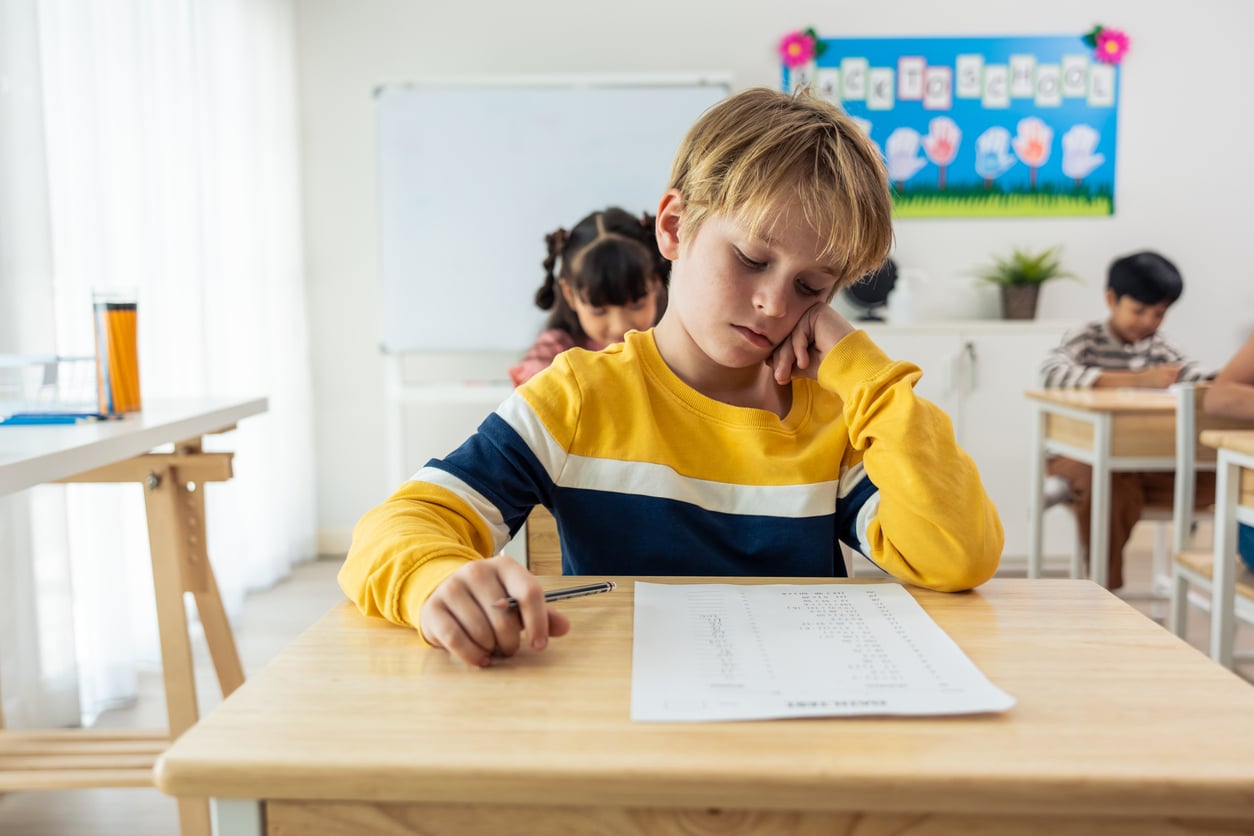
A worksheet that should take ten minutes stretches into forty-five. A child presses too hard on the pencil, writes large uneven letters across the page, or constantly erases and rewrites. Teachers may comment that handwriting “isn’t developing as expected,” or that a student seems capable but struggles to keep up with written work.
Some children avoid writing altogether. Others put their head down at their desk, become frustrated, or complain that their hand hurts. Parents may hear things like:
“Writing takes forever.”
“They rush and make careless mistakes.”
“They seem tired halfway through homework.”
It’s easy to assume the problem is motivation, effort, or attention.
But in some cases, the real explanation may lie deeper in early brain development — specifically in something called primitive reflexes.
These early reflexes play an important role in how the brain and body develop during infancy. When they remain active longer than expected, they can affect skills that children rely on every day in school, including handwriting, focus, and stamina for academic work.
One of the most commonly connected reflexes to writing challenges is the Palmar Grasp Reflex.
What Are Primitive Reflexes?
Primitive reflexes are automatic, involuntary movements that originate in the brainstem and are present at birth. These reflexes are designed to support early survival and development during infancy.
They help babies:
• Feed
• Respond to sensory input
• Develop early muscle tone
• Build foundational movement patterns
• Begin interacting with their environment
As the brain develops, these reflexes are meant to gradually integrate during the first year of life. When integration occurs, higher brain regions gain greater control over movement, coordination, and attention.
This developmental process allows children to develop stronger voluntary control over their bodies. Coordination improves, fine motor skills strengthen, and tasks like writing, drawing, and using utensils become easier.
However, when a primitive reflex remains active beyond the expected developmental stage, it can interfere with communication between lower and higher brain regions.
In simple terms, the brain may still be relying on an early movement pattern when it should have moved on to more advanced control.
When this happens, children may appear to struggle with skills that require coordination, endurance, and focus — even though they are trying their best.
The Palmar Grasp Reflex and Early Development
The Palmar Grasp Reflex is one of the earliest reflexes present at birth.
When the palm of an infant’s hand is touched, their fingers automatically close around the object. This reflex helps babies grasp and hold onto objects before voluntary hand control has developed.
Over time, as the brain matures and motor control improves, this reflex should integrate. The child’s brain gradually replaces this automatic response with controlled hand movements.
This transition is important because it lays the foundation for:
• Fine motor coordination
• Controlled pencil grip
• Hand strength and endurance
• Dexterity needed for writing and everyday tasks
When the Palmar Reflex remains active, it can interfere with these skills.
How a Retained Palmar Reflex Can Affect Handwriting
Handwriting is a complex task that requires multiple systems in the brain to work together.
A child must maintain posture, stabilize the shoulder and arm, coordinate finger movements, understand spacing on the page, and sustain attention long enough to complete written work.
If the Palmar Reflex is still active, the brain may struggle to control fine motor movements efficiently. The hand may fatigue quickly, grip may be inconsistent, and writing may require far more effort than it should.
Common signs linked to a retained Palmar Reflex include:
Handwriting challenges
• Messy or inconsistent handwriting
• Letters that are very large or poorly spaced
• Difficulty staying within lines on the page
• Pressing too hard or too lightly with a pencil
• Altered or immature pencil grasp
• Slow writing speed
Homework fatigue
• Complaints that their hands hurt while writing
• Homework taking much longer than expected
• Avoidance of writing assignments
• Difficulty finishing written tasks
Fine motor challenges
• Trouble buttoning clothing
• Difficulty zipping jackets
• Struggles tying shoes
• Difficulty opening snack bags
• Trouble using utensils
Coordination and independence challenges
• Difficulty brushing or washing hair
• Trouble getting dressed independently
• Shoes that frequently come untied due to weak knots
• Difficulty typing or keyboarding in older students
These challenges can be frustrating for children.
When everyday tasks require extra effort, children may become tired more quickly. Fatigue can lead to irritability, emotional frustration, and resistance to schoolwork.
What may appear to be defiance or laziness is often a child working much harder than their peers just to complete the same tasks.
Why Writing Struggles Often Affect Confidence
Writing is a major part of the school day.
Students are expected to take notes, complete worksheets, write assignments, and keep up with classroom pacing. When handwriting is slow or difficult, children may fall behind even if they understand the material.
Over time, this can impact:
• Academic confidence
• Participation in class
• Willingness to attempt written work
• Overall attitude toward school
Children may begin to believe they are “bad at school” when the real issue is developmental coordination.
Understanding the root cause can shift the conversation from “Why won’t they try?” to “What support does their brain need?”
How Brain Balance Addresses Primitive Reflex Development
Primitive reflexes do not exist in isolation. They are part of a larger developmental system that includes sensory processing, motor development, cognitive skills, and emotional regulation.
At Brain Balance, the goal is not simply to address a single symptom like handwriting difficulty.
Instead, the program looks at how the brain is developing as a whole.
The first step is a comprehensive assessment that evaluates multiple areas of development, including:
• Primitive reflex maturity
• Sensory processing
• Motor coordination
• Cognitive performance
• Academic skills
• Emotional and behavioral functioning
This evaluation helps identify how different areas of the brain are communicating and where developmental gaps may exist.
From there, a personalized plan is created that uses a multi-modal approach, including:
• Reflex integration exercises
• Sensory stimulation
• Motor skill training
• Cognitive engagement
• Nutritional support
By strengthening multiple systems simultaneously, the program helps support improved brain connectivity and developmental maturity.
Rather than chasing individual symptoms, this approach addresses how the brain actually develops — creating a stronger foundation for skills like focus, learning, handwriting, organization, and emotional regulation.
A Different Way to Think About Writing Struggles
If your child struggles with handwriting, slow homework completion, or fine motor tasks, it may not be about effort or motivation.
Sometimes the brain simply needs help strengthening the developmental foundation that supports those skills.
Understanding primitive reflexes can provide important insight into why certain challenges occur — and how targeted developmental work can help.
The first step is gaining a clear understanding of your child’s unique developmental profile.
A Brain Balance assessment evaluates how multiple areas of the brain are working together and identifies where support may help the most.
From there, families receive answers and a plan designed to support progress in areas like focus, learning, coordination, confidence, and behavior.
If you’re wondering whether retained primitive reflexes could be contributing to your child’s challenges, scheduling an assessment is a helpful place to start.
New to the Primitive Reflex Series?
Start with the first article here:
https://www.brainbalancecenters.com/blog/primitive-reflexes-in-children-and-developmental-symptoms-brain-balance
Sources and Research
- Jackson, R., & Jordan, J. (Year). Multimodal intervention improves developmental outcomes in children. Frontiers in Psychology.
(Include full citation details from the published study page for SEO credibility.)
- Brain Balance Centers. Multimodal Approach Research.
https://www.brainbalancecenters.com/multimodal-approach-research
- Goddard Blythe, S. (2005). Reflexes, Learning and Behavior: A Window into the Child’s Mind. Fern Ridge Press.
- McPhillips, M., & Sheehy, N. (2004). Prevalence of persistent primary reflexes and motor problems in children with reading difficulties. Dyslexia.
- Konicarova, J., & Bob, P. (2013). Retained primitive reflexes and ADHD in children. Activitas Nervosa Superior.
- Berninger, V. W., & Richards, T. L. (2010). Interrelationships among behavioral markers, genes, brain and treatment in dyslexia and dysgraphia. Future Neurology.
- Diamond, A. (2000). Close interrelation of motor development and cognitive development. Child Development.