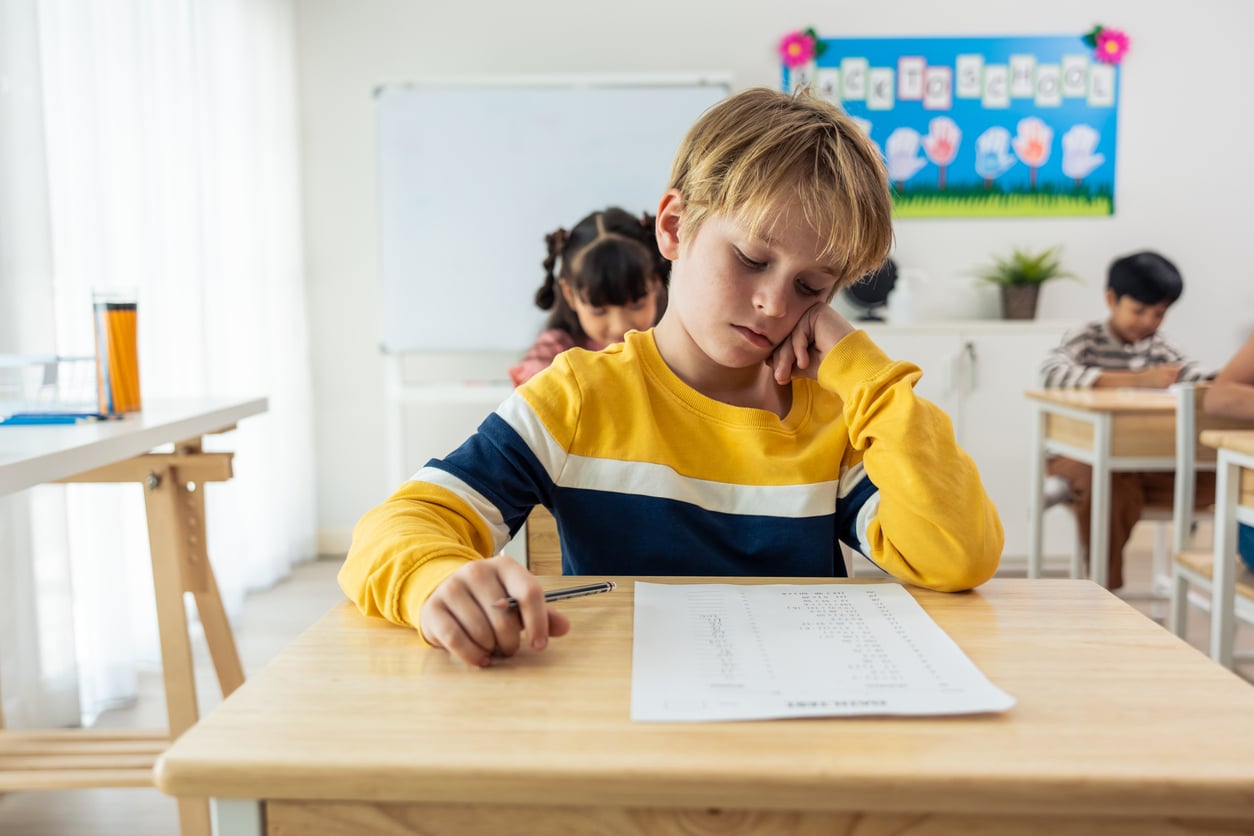
This year marked an important milestone. The first children born during the earliest months of COVID-19—babies who learned to smile, crawl, and explore in a world defined by distancing, limited interaction, and heightened stress—turned five. They entered kindergarten in 2025 carrying early experiences shaped not by choice, but by circumstance.
For many adults, the desire to leave the pandemic in the past is understandable. Life looks more familiar now. But for children whose earliest developmental windows were shaped by fewer interactions, fewer sensory-rich experiences, and more environmental stress, the effects of that time are still visible.
A Gallup survey this year found that 45% of U.S. parents believe the pandemic negatively affected their child’s social skills, and 42% say it impacted their child’s mental health. Among those families, about one in five report that these challenges continue today. These numbers don’t signal catastrophe; they signal an opportunity—a moment to understand where children are now so we can support where they are capable of going
What 2025 Made Clear
Across schools, clinics, and family conversations, consistent themes emerged:
- Many young children needed more support with reciprocal communication — reading cues, initiating play, and sustaining interaction.
- Teachers noted increases in impulsivity, emotional reactivity, and difficulty with transitions.
- Referrals rose for speech, occupational therapy, and emotional regulation support.
- There was a wider range of school readiness than seen in previous years, especially in foundational skills that support attention, behavior, and learning.
These observations mirror national research showing that infants and toddlers who grew up during the pandemic had fewer opportunities for social play, movement, and sensory experiences, the experiences that help establish early brain networks essential for communication, attention, and emotional regulation.
And what parents report to us at Brain Balance aligns with this broader picture: the most common concerns today involve social communication, behavioral regulation, and emotional intensity—the very systems children had fewer chances to practice and strengthen during the disrupted early years.
None of these trends point to permanent limitations. They point to the central truth of development: the brain reflects experience, and early experiences were altered for millions of children.
There's Reason For Hope
Development is adaptive. The brain builds and refines pathways through movement, play, sensory input, connection, and repetition. When those experiences are limited, development can slow, but the brain remains open, responsive, and ready to grow.
The pandemic shaped early experiences, but it did not limit children’s potential. Their brains are still developing. They can strengthen the pathways that support communication, attention, emotional resilience, and learning.
"They'll Grow Out Of It" isn't a Plan
One of the most common beliefs I hear from families is that children will simply “grow out of” the challenges we’re seeing post-pandemic. And while it comes from a place of hope and trust in a child’s resilience, it doesn’t always align with what we know about development.
Children can absolutely strengthen the skills that feel harder right now, but they do so through experience, not time alone.
Development is not a clock that keeps ticking no matter what. It is an active process, shaped by the movement, connection, practice, and sensory input children receive each day. If those experiences were interrupted during critical windows, as they were for many kids born or raised during the pandemic, the brain doesn’t automatically fill in the gaps later.
It grows when we give it the inputs it missed. That’s why waiting, hoping, or assuming things will resolve on their own can sometimes delay progress. Children do best when we meet them where they are and intentionally support the systems that need strengthening — communication, regulation, attention, coordination, and emotional resilience.
The good news is that these systems remain highly adaptable. With the right experiences, they can catch up, connect, and thrive.
This is the heart of my work — and the heart of what Brain Balance does every day:
We create intentional, structured experiences that strengthen the foundational brain systems children rely on to thrive.
It’s not about making up for lost time. It’s about giving the brain what it needs now.
A Call-to-Action for Parents in 2026
The good news is that the same systems that were shaped by early-pandemic experiences are also the most open to strengthening. Small, daily experiences can create meaningful change, especially when they build the sensory, motor, and emotional foundations that support learning and behavior. Here are the areas that matter most:
1. Remember That Everything in Development Is Connected
One of the most helpful things to understand is that skills don’t develop in isolation. The same underlying systems support attention, behavior, communication, and emotional regulation. When those foundational systems are weak or underdeveloped — as we often see in children whose early experiences were disrupted — higher-level skills can feel harder or less consistent.
Trying to address challenges one at a time, without strengthening the foundation they rely on, can lead to slow or frustrating progress. But when we support the whole system — sensory, motor, cognitive, and emotional — multiple areas often improve at once.
This whole-child, whole-brain approach is what creates lasting change.
2. Build the Foundation Through Movement
Movement is the engine of development. Activities that engage muscles, cross the midline, challenge balance, or require coordination help strengthen the networks that support attention, behavior, and learning. A few minutes a day can make a measurable difference.
3. Add More Sensory-Rich Experiences
Children’s brains grow by engaging with the world. Play that involves touch, sound, rhythm, textures, or outdoor exploration helps build the underlying systems that support communication, focus, and emotional regulation.
4. Nurture Social Connection in Small, Supported Ways
Kids don’t need large groups to rebuild social skills; they need repeated, positive interactions. Playdates, cooperative games, and structured turn-taking help strengthen reciprocal communication and social timing.
5. Model and Teach Emotional Regulation
Emotional skills develop through practice and co-regulation. Naming feelings, breathing together, and showing how to recover after frustration help build the pathways that make future regulation easier.
6. Watch for Patterns, Not Isolated Moments
Development is rarely linear. What matters is not a tough day, but the overall shape of your child’s weeks and months. If challenges persist or begin to impact confidence, it’s a sign your child may benefit from additional support.
7. Seek Developmentally Informed Support When Needed
Early support can accelerate progress by strengthening the systems that make everything else easier: attention, communication, behavior, and learning. When we target the foundation, change becomes possible across multiple areas at once.
This is where Brain Balance can play a role. For families who want a structured way to build the brain systems that support communication, regulation, and learning, our programs offer a research-informed, whole-child approach grounded in neurodevelopmental science.
Book your child's comprehensive assessment today.
Fill out the form above and book your child the support they deserve and take the first step toward improved focus, regulation, and confidence.