



We have helped more than 50,000 individuals get to the root of their struggles. The challenges that are most commonly reported in the kids and teens we work with include:
- Distractibility and Attention
- Task Avoidance
- Attention to Detail
- Follow Through with School Work
- Time Management
- Organization
- Impulsivity
- Mood and Behavior
- Sensory Processing
Brain Balance does not require that a child has a medical diagnosis, nor do we clinically diagnose medical conditions. Our focus is on understanding the struggles these children experience and helping them develop and strengthen the connections to help reduce those struggles.
For those who do have a diagnosis,1 research has shown that the unique challenges your child is facing can be linked to weak connections across different regions of the brain.
- Attention Deficit Hyperactivity Disorder (ADHD)
- Autism Spectrum Disorder
- Oppositional Defiant Disorder (ODD)
- Processing Disorders – Auditory (APD), Visual, Sensory (SPD)
- Learning Disorders (Dyslexia, Dysgraphia, Dyscalculia, Dyspraxia
The good news is, we know that the brain can change in a way that leads to improvements in these symptoms. The Brain Balance program exercises and activities are uniquely designed to help strengthen and build new connections by using a combination of physical, sensory, and cognitive activities. These new, efficient, and effective connections in the brain lead to improvements in our ability to complete cognitive tasks and in our executive functioning:
| Cognitive Tasks | Executive Functioning |
|
How we manage:
|
We use what we learn in the personal assessment to set up your child’s program. By doing this for each child, individually, we create a customized program that addresses any deficits in functions or skills your child may have.
The frequency and duration of these tasks, activities, and exercises are tailored based on your child’s needs.
See Improvements in Your Child
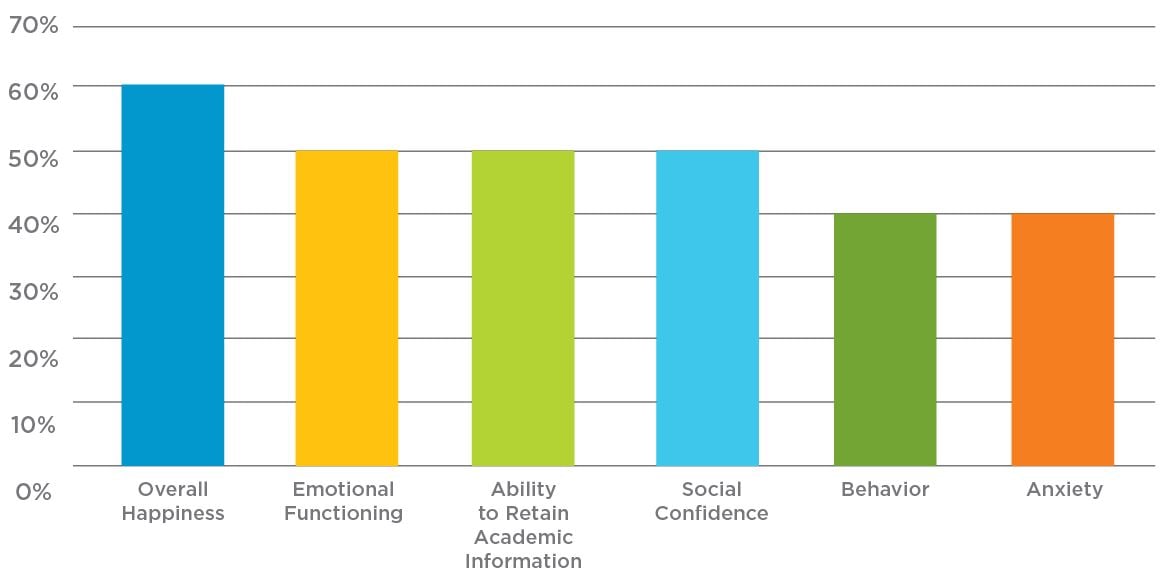
Parents were surveyed before and after their child completed 5-6 months of the Brain Balance Program. The results showed that parents report an average of 40-60% improvement in their children in the following categories:2
Do you have personal questions relating to your child’s difficulties?
Our team is here to help you. Take a second to fill out our form. Our local staff will reach out to discuss your individual concerns!
